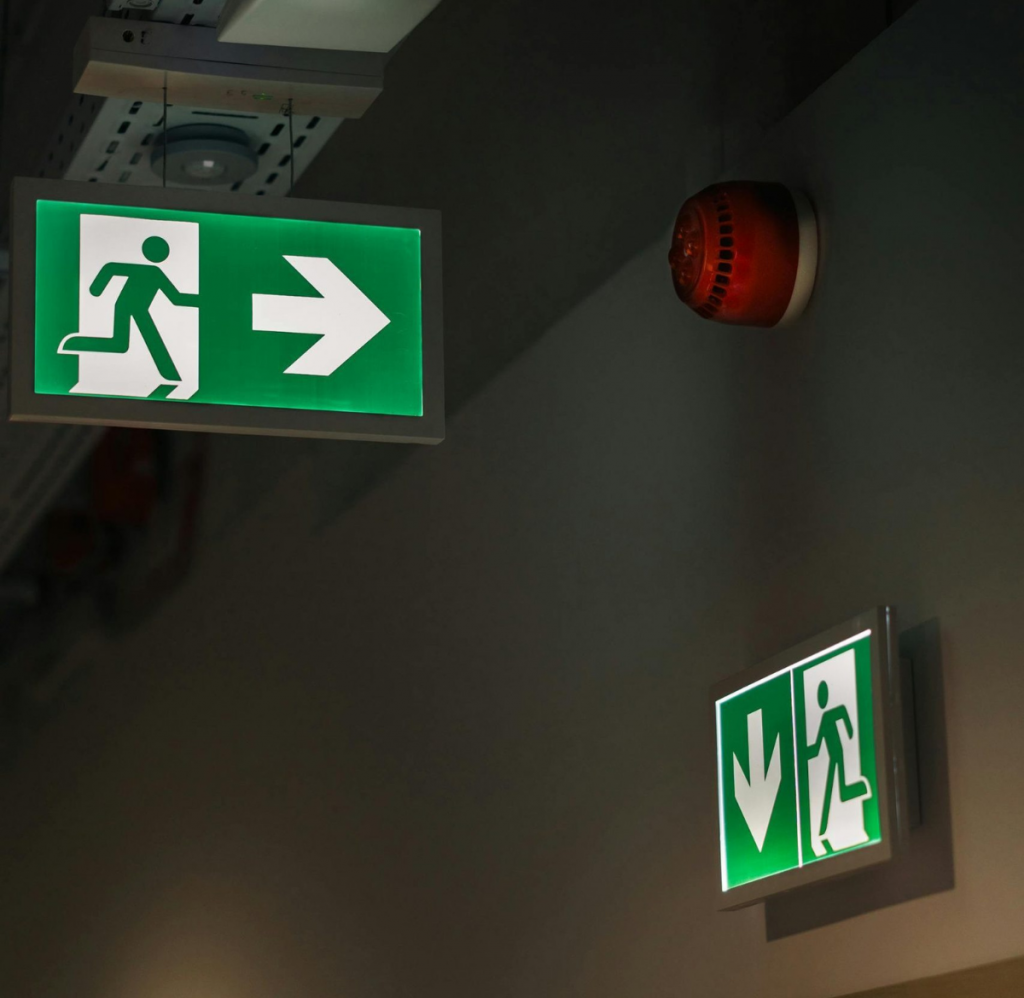
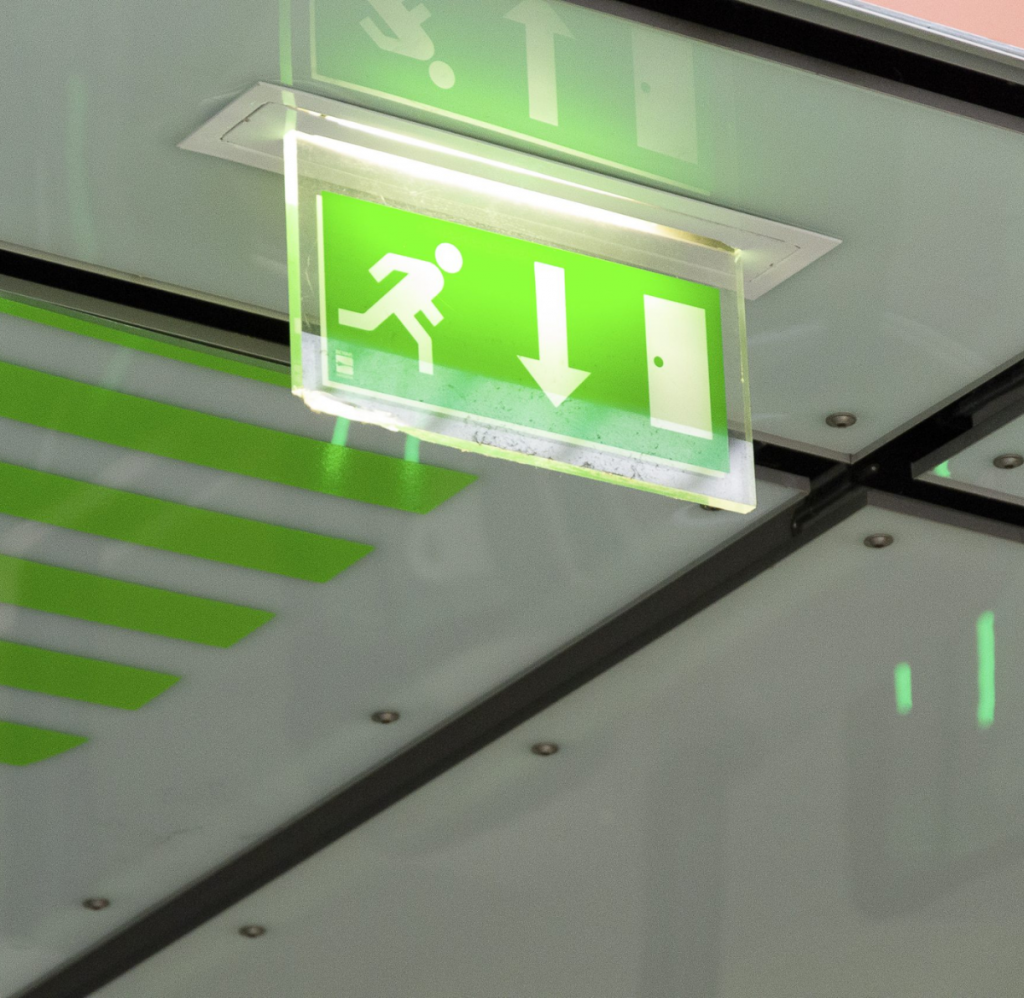
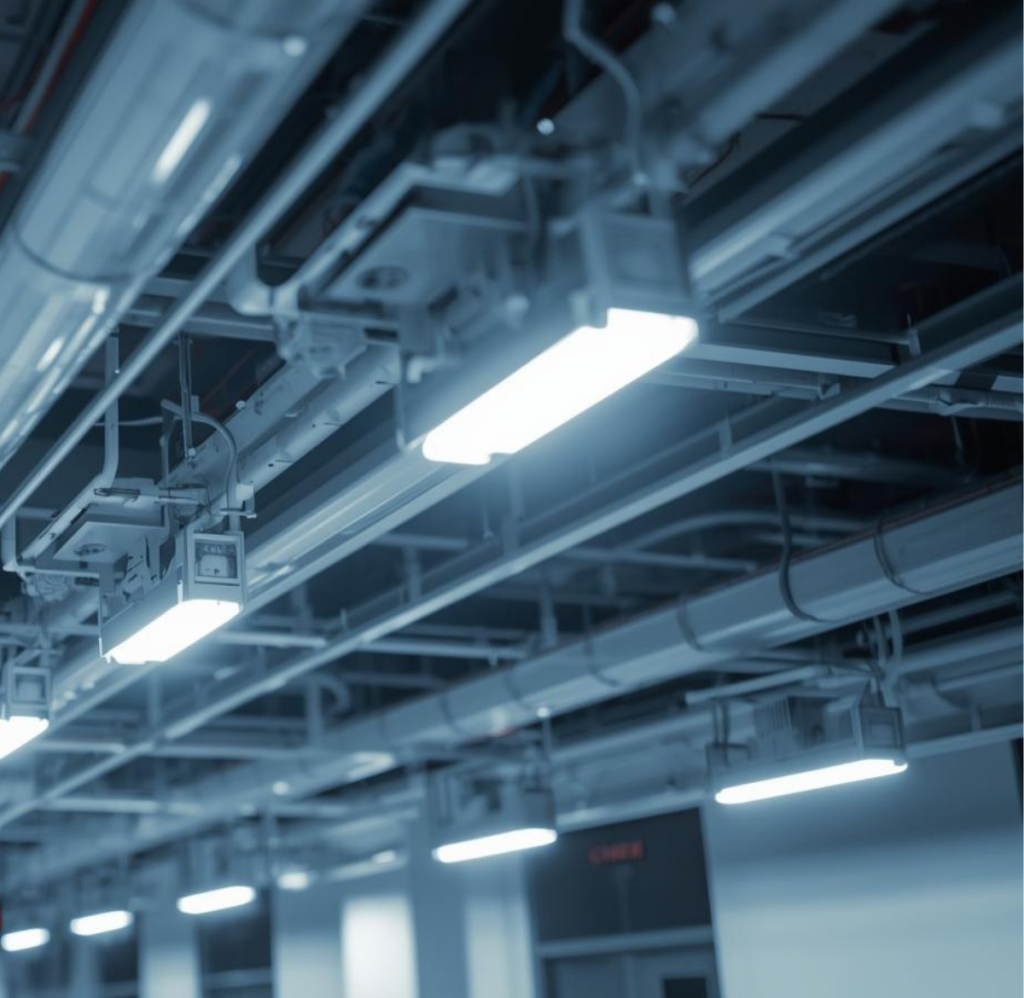
Emergency lighting consists of battery backed up lights. By monitoring the mains power, when a power failure is detected, the light reverts to its battery and provides low level lighting across open spaces and escape routes. Lights stay on for a pre-determined duration. Illuminated emergency exit signage is also used to provide route guidance.
It is a legal requirement that emergency lighting is function tested every month to make sure the light comes on when needed. A full battery duration test needs to be carried out annually to ensure the lights stay on for the required duration.
There are multiple emergency lighting system options available, each offering varying levels of automation. Thanks to Emcals’ extensive supply chain, we offer a full range of emergency lighting solutions.
We only work with reputable emergency lighting suppliers, and we carefully select our supplier partners, ensuring that we only offer the best and most reliable solutions to our clients.
Self-contained - Basic
A self-contained emergency light has its own on-board battery. Each light is connected to a permanent live feed for monitoring purposes, each light has a visible, illuminated LED, this is known as a charge healthy indicator and provides a visual that that the light is connected to the mains power and is charging.
Testing is a manual process, it requires switching off the mains power to replicate a failure. Then a visual
inspection of every light to check illumination/duration as
appropriate. The mains power is then restored before the lights are visually inspected again to check that the charge healthy LED indicator is illuminated. All results need to be manually recorded and stored for future inspection.
Self-contained - Self-Test
Each emergency light has its own on-board battery and is connected to a permanent live feed for monitoring purposes. This fitting type tests itself periodically, if a fault is detected then the charge indicator will change colour and/or flash. The flashing sequence signifies the type of fault.
Testing is a little simpler as there is no need to cut the mains power. However, the visual inspection still needs to take place and the results, including date and time of testing, need to be manually recorded and stored for future inspection.
Self-Contained - Addressable Test Systems
Each emergency light has its own on-board battery and is connected to a permanent live feed for monitoring purposes.
These systems offer automated testing; each fitting is given an address and testing regimes are programmed to happen at a set date of each month/year. The systems then periodically test all the emergency lights without manual intervention, outcome reports are generated and sent to the maintenance team for review.
When faults occur, the system provides a diagnostic of the fault and the location of the emergency light. This makes remedial work more efficient.
While this type of system often requires a higher capital outlay, they do provide client savings over the systems lifetime due to reduced operational expenditure.
Centralised Systems - Static Inverters
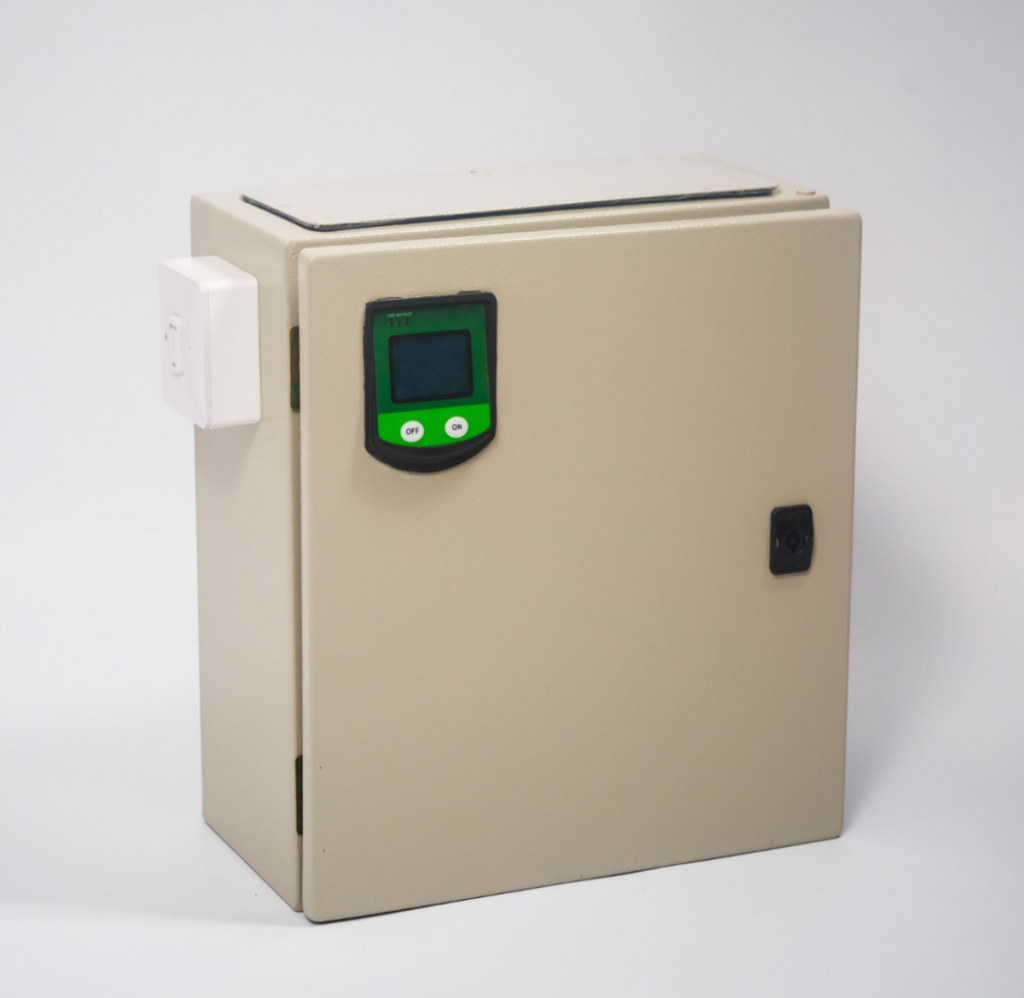
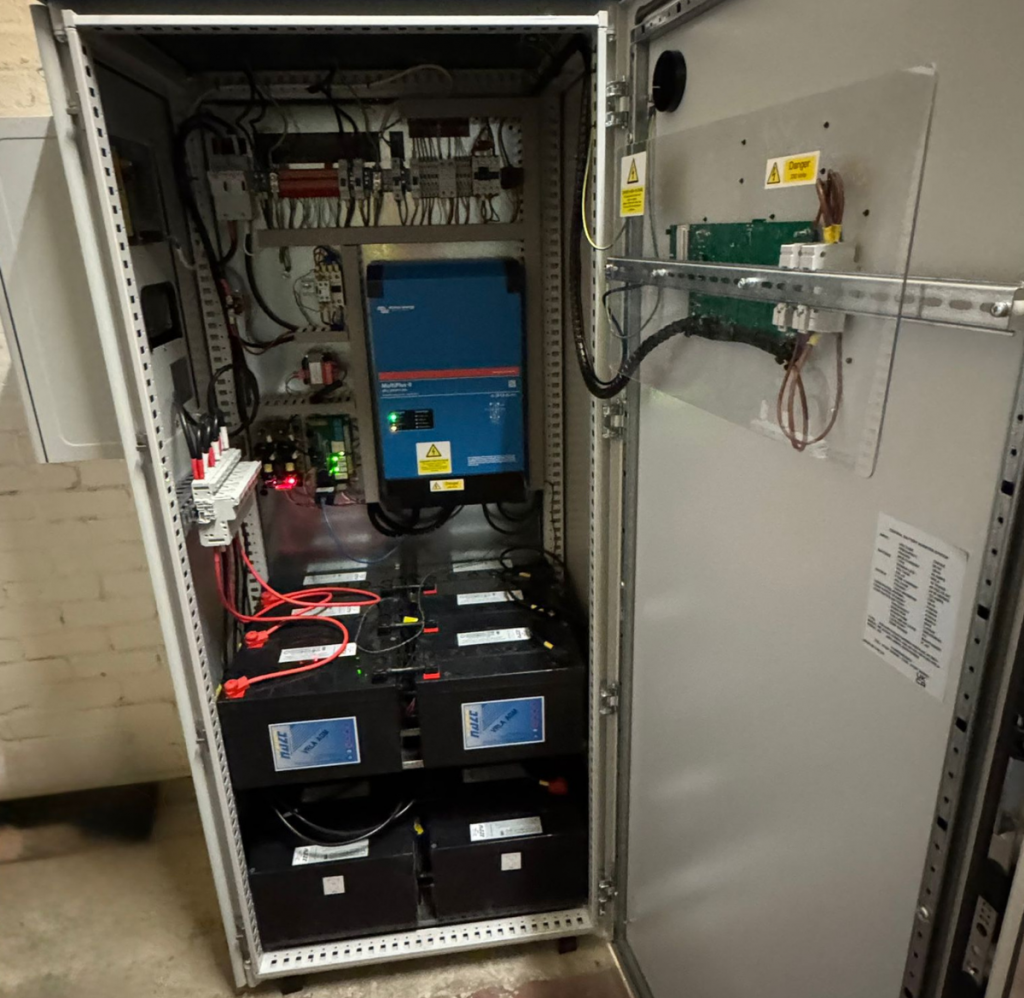
Centralised systems help simplify maintenance as batteries are in one location,
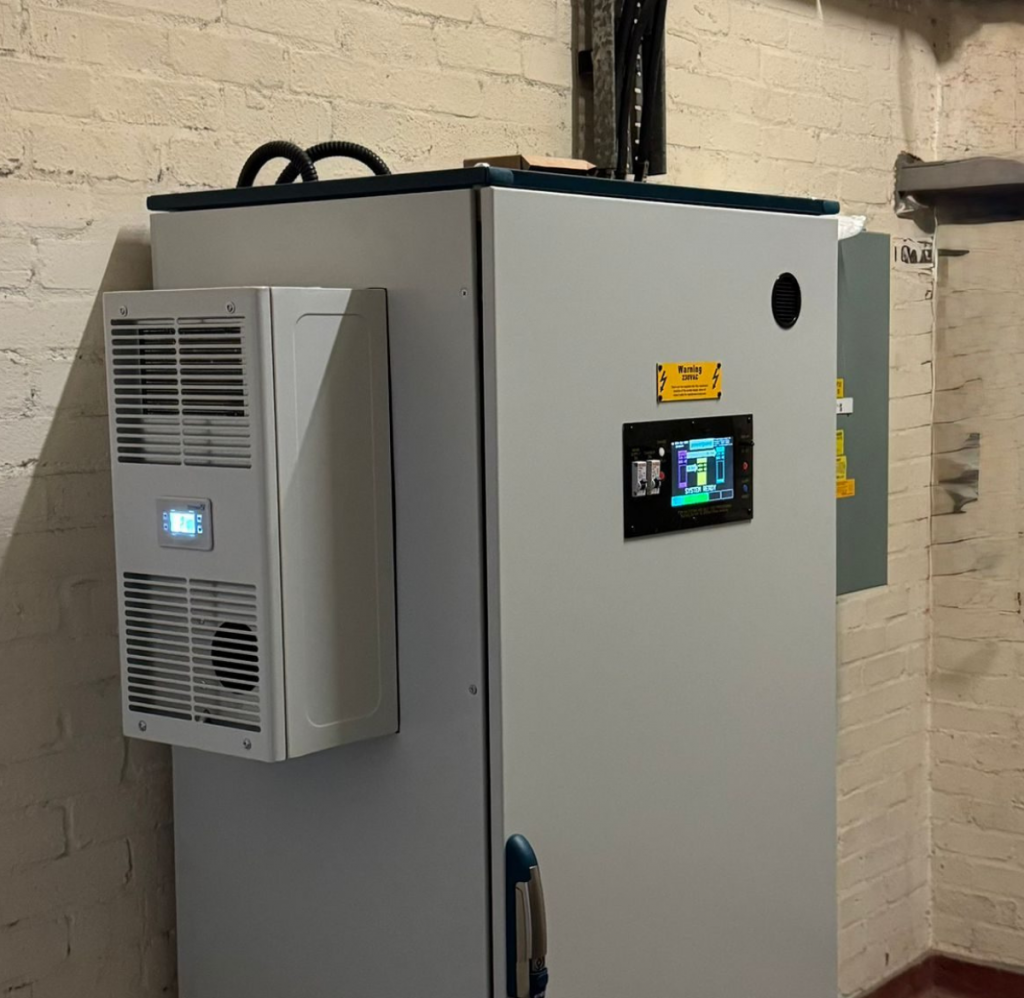
usually at ground level. Rather than each emergency light having its own dedicated battery, they are all connected to a central battery bank. As batteries are affected by temperature, central systems enable the environment to be more easily controlled.
Monitoring devices are used to identify local circuit power failures, when detected a relay is switched to enable the battery power to reach the connected lights.
Static inverters run from 230V AC power, this means that compatibility of connected luminaires is assured.
Testing is typically manual on this type of system, requiring mains power to be switched off and all connected luminaires to be visually inspected to ensure
illumination. All results need to be manually recorded and stored for future inspection.
Centralised Systems – Addressable Central Battery Systems
These systems offer the same benefits as Static Inverters, providing a central bank of batteries in a remote location that can be temperature controlled.
These systems have in-built intelligence using software to carry out testing to pre-programmed schedules. Each connected luminaire is addressed, faults are diagnosed and location of failed luminaires is provided, making fault rectification a simple process.
Test reports are auto generated and communicated to maintenance personnel.
When faults occur, the system provides a diagnostic and location of the fault, making remedial work more efficient. Test Reports are stored within the system
making them easy to access when needed.
This system type often requires a higher capital outlay but provide client savings over the system lifetime due to reduced operational expenditure.
Centralised Systems – Central Battery Units 24V, 48V, 108V AC/DC
While new installations typically take advantage of other technologies, there are a high number of legacy installations that include central battery systems that
operate at lower voltages.
These systems provide the same benefits as other entralised system types, but they do require connected lights to be able to operate at the appropriate voltage.
To keep installations operable, Emcal Emergency Lighting Solutions can provide replacement systems or luminaires as required.
Central Systems - De-Centralised
This is a design principle that is becoming more popular with clients and building designers.
A concern about centralised emergency lighting systems is redundancy, it can be perceived to be a single point of failure, and some consider it to be a high-risk strategy. The primary issue with self-contained systems is increased maintenance from having multiple batteries that are located all over the building. De-centralising mitigates both these points.
By using multiple, smaller systems to cover certain areas, there is increased redundancy, while retaining the benefits of being able to carry out maintenance from central, controlled locations, at ground level.
This can be an ideal solution for gradual roll-out as installations can easily be phased. Addressable systems can be used, giving the building operator increased benefits of automated testing.